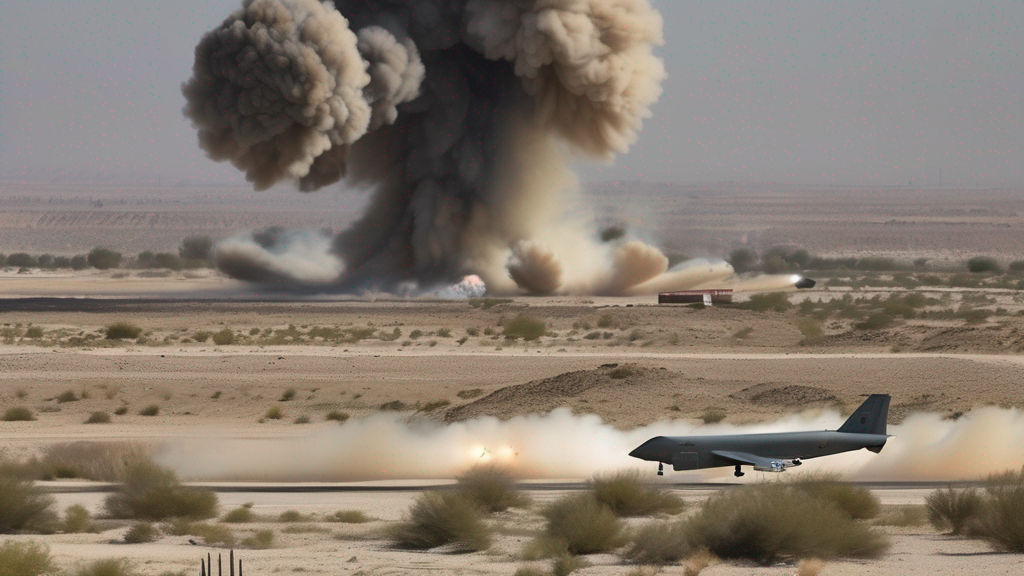
The bombs started falling again overnight, and this time Washington isn’t pretending it’s anything other than payback.
US forces launched a fresh wave of strikes on Iran in the early hours, with explosions reported across sites in the south of the country. The attacks follow a dramatic escalation after Iranian forces targeted American ships, an act that Donald Trump wasted no time in responding to with characteristic bluntness.
“These strikes are retribution for yesterday’s bombing of ships by Iran,” Trump said, framing the operation as a direct and proportional response rather than a broader escalation of hostilities.
Whether the rest of the world sees it that way is another matter entirely.
Tehran had already promised strong retaliation before the second wave of strikes hit, leaving diplomats scrambling and oil markets lurching into the kind of volatility that traders and pensioners alike tend to dread. Brent crude spiked sharply in early trading as the news broke.
The southern strikes appear to have targeted military infrastructure, though Iranian state media has offered conflicting accounts of the damage and casualties. That fog of information is entirely predictable at this stage; both sides have strong incentives to shape the early narrative.
What’s striking is the speed of it all. Within 24 hours of the initial ship attacks, the US had launched two separate rounds of strikes on Iranian soil. That pace of escalation is something even seasoned Middle East analysts have described as alarming, with the usual diplomatic breathing room compressed to almost nothing.
For British households, the immediate concern beyond the obvious humanitarian one is energy costs. The UK imports relatively little directly from Iran, but global oil prices don’t operate in neat bilateral corridors. Any sustained conflict near the Strait of Hormuz, through which roughly 20% of the world’s oil flows, feeds straight through to fuel forecourts and energy bills.
Iran’s promised retaliation is still outstanding. The question now is whether Tehran strikes back hard enough to force yet another American response, or whether back-channel pressure from Gulf states and European powers creates some kind of pause. History isn’t especially encouraging on that front.
The next 48 hours will tell us a great deal about how contained, or catastrophic, this is going to get.