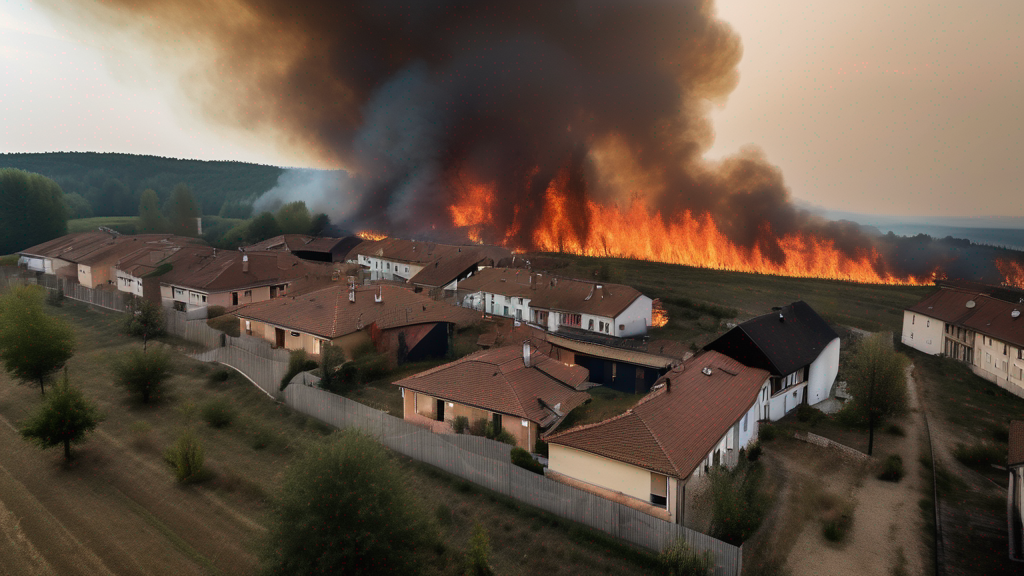
Europe is on fire. Not metaphorically, not as a warning shot. Actually, viscerally, historically on fire.
A wildfire near Bordeaux has razed more than 420 square kilometres of forest in under four days, making it one of the most destructive blazes France has seen in decades. To put that in perspective, that’s roughly the size of Chicago swallowed whole by flames in less time than it takes most of us to get through a working week.
Meanwhile, the Madrid region is recording the worst fires in its history. Spanish authorities have deployed military units alongside civilian firefighting crews, and thousands of residents have been forced from their homes with little more than the clothes on their backs.
The numbers are stark. Across the European Union this summer, over 660,000 hectares have burned, according to the European Forest Fire Information System. That figure already dwarfs the ten-year average for an entire fire season, and we’re not done yet.
Firefighters on the ground in the Gironde department of southwest France have described conditions as near-impossible. “The fire moves faster than we can respond,” one crew coordinator told local reporters. “We contain it on one side, it breaks out somewhere else.”
Aerial resources have been critical. Canadair water-bombing aircraft, EU emergency assets deployed under the Civil Protection Mechanism, and hundreds of firefighters from Portugal and Germany have all been drafted in to help French crews. The cross-border solidarity is real, even if it’s arriving under genuinely desperate circumstances.
Climate scientists have been pointing to this for years. A drier spring, a brutal July heatwave that pushed temperatures past 40°C in parts of France and the UK, and critically low soil moisture have created what one French forestry official called “a powder keg waiting for a spark.”
Satellite mapping from Copernicus, the EU’s earth observation programme, is now being used in real time to track fire fronts, predict spread, and direct resources more efficiently. It’s one of the few genuinely encouraging developments in an otherwise grim picture.
The question that lingers, though, is whether better technology and faster emergency responses are actually enough. Or whether Europe is simply learning to manage a crisis that, without serious structural change, will only grow worse each summer from here.