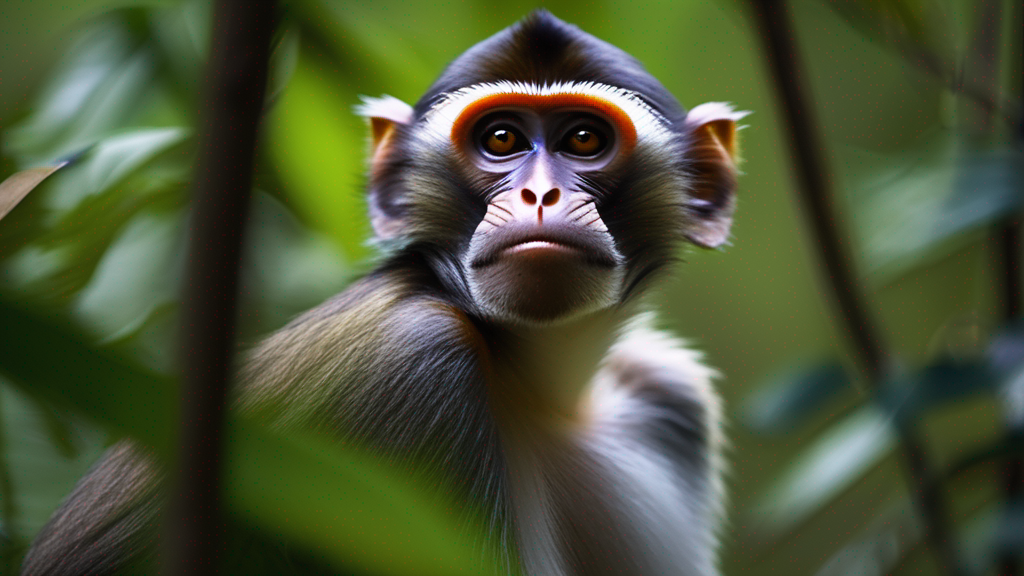
Deep in the forests of the Democratic Republic of Congo, a monkey had been going about its business for who knows how long, utterly unbothered by the fact that science hadn’t got round to naming it yet.
Researchers have now formally identified a new species of monkey, notable for its striking orange lips and distinctive colouring that sets it apart from its closest relatives. The species was discovered in a remote region of the DRC, one of the most biodiverse places on the planet and, frankly, still one of the least explored.
The monkey belongs to the Cercopithecus genus, a large and varied group commonly known as guenons. There are already over 25 recognised species within the group, but this one had managed to stay off the books, tucked away in dense forest where field researchers rarely venture.
Scientists described the discovery as a reminder of how much remains unknown about central Africa’s wildlife. As one researcher on the project put it, the DRC’s forests are so vast and so difficult to access that new species aren’t just possible, they’re practically expected.
“We’re still very much in the early stages of understanding what lives in these forests,” one of the team noted. “This find suggests there could be others.”
The orange lips aren’t just a curiosity. Colouration in guenons often plays a role in how individuals recognise members of their own species, particularly in forest environments where visibility is limited. That vivid splash of colour could be doing a lot of social heavy lifting.
The DRC is home to more primate species than any other country in Africa. Gorillas, bonobos, and over 30 other primate species share its forests, many of them under serious threat from habitat loss and poaching. Identifying new species matters not just scientifically but for conservation; you can’t protect what you haven’t named.
For now, the newly described monkey joins a growing list of species discovered in recent years that had been hiding, quite successfully, in plain sight.
The real question is how many more are still out there, waiting for someone to finally notice them.